
Angiogram & Stenting
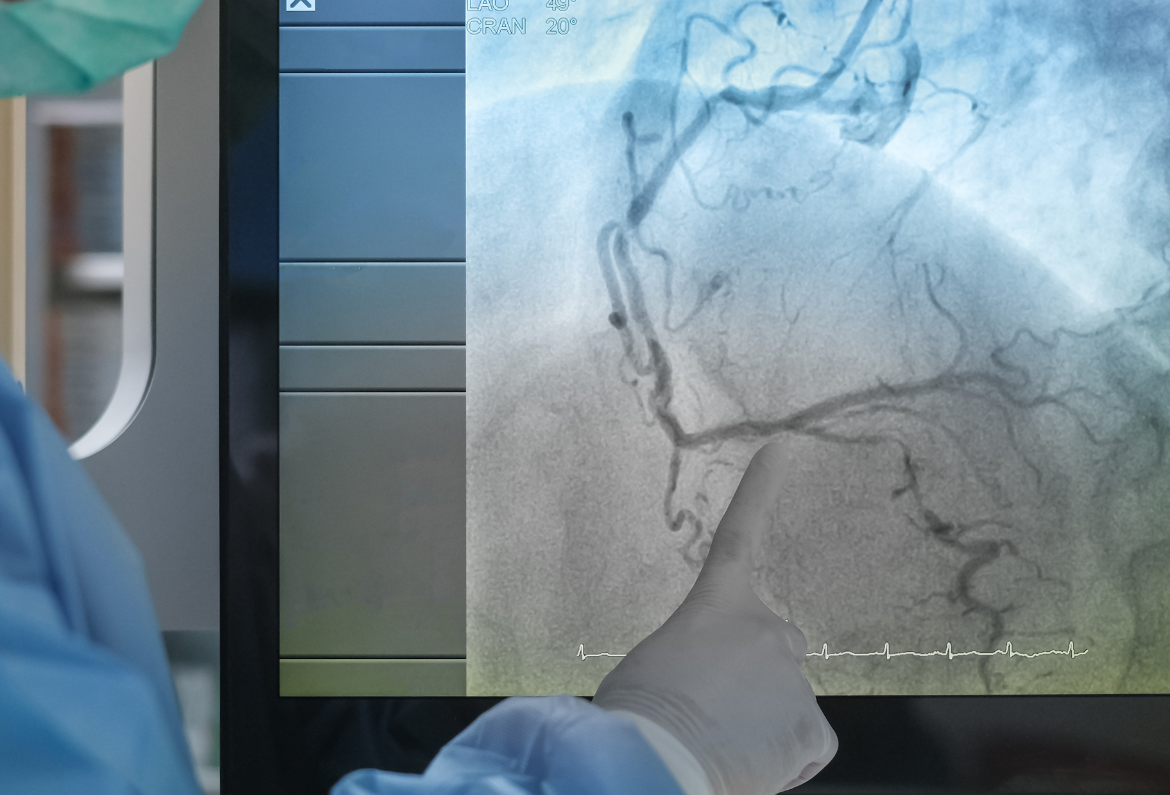
A coronary angiogram is part of a general group of heart tests and treatments called cardiac catheterization. Cardiac catheterization uses one or more thin, flexible tubes, called catheters. The tubes are placed within the major blood vessels of the body and the heart. The test requires a small cut in the skin. During a coronary angiogram, a treatment called angioplasty and stenting can be done to open any blocked arteries.
Why Is It Done?
Your healthcare team may suggest a coronary angiogram if you have:
Chest pain, called angina.
Pain in the chest, jaw, neck or arm that can't be explained by other tests.
Blood vessel problems.
A heart problem you were born with, called a congenital heart defect.
Irregular results on an exercise stress test.
Chest injury.
Heart valve disease that needs surgery.
An angiogram typically is not done until other noninvasive tests are used to check the heart. Such tests might include an electrocardiogram, an echocardiogram or a stress test.